
Jasper National Park is famous for its mountains, but after dark those impressive, looming silhouettes get upstaged by a different spectacle: thousands upon thousands of stars. The Jasper Dark Sky Preserve is the largest accessible dark sky preserve in the world, meaning some of Canada's most spectacular stargazing is surprisingly easy to experience.
Jasper strikes the perfect balance between lots of conveniences and lack of light pollution. On clear nights the stars are so numerous and bright that it looks like someone spilled salt across the sky. The Milky Way stretches overhead and, if conditions align, the northern lights may make an appearance.
Why the Jasper Dark Sky Preserve is worth adding to your itinerary
- You get incredibly dark skies without completely leaving civilization.
- You might see the aurora borealis (also known as the northern lights).
- There are incredible stargazing spots just minutes from town.
- Convenient access to local planetarium, astronomy guides, the most powerful telescopes in the Rockies, astrophotography tours, and more.
- Every season of the year offers a new experience.
- Every October the Jasper Dark Sky Festival brings astronauts, authors, science communicators and musical performances to town.
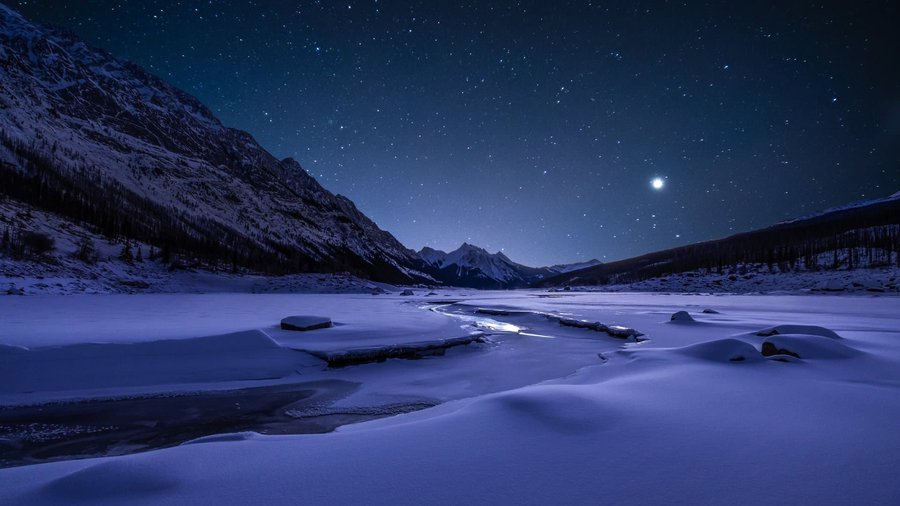
Best time to stargaze in Jasper
- Fall: There's a reason the Jasper Dark Sky Festival occurs in the autumn. The sun has started setting earlier, but temperatures are still relatively warm when paired with good outerwear.
- Winter: With the sun setting around 5pm on the shortest day of the year, this season offers extensive access to the night for those prepared with their thickest coats.
- Spring: Things are warming up, trails are opening, daylight hours are expanding.
- Summer: Long days and late sunsets, only the owliest of night owls can see the stars during this season. But the Jasper Planetarium operates year-round.
Best places to stargaze
- Pyramid Island: near town (10 minute drive), convenient benches, panoramic views of lake and mountains
- Medicine Lake: large shallow lake with lookout to see stars reflected, 15-20 minute drive from town
- Lake Annette: near town, sandy beach, bathroom access and picnic tables.
- Columbia Icefield: scenic drive down the Icefields Parkway
- Shovel Pass Lodge: Located on the Skyline Trail, this backcountry lodge offers a comfortable and catered way to access the ultra-dark skies of truly remote places. The lodge is reached by a 20 kilometre hike and only operates in the summer. For those with a tent and backcountry pass, places like the Tonquin Valley, Maligne Lake, and Big Bend are also great places to camp and stargaze.
Jasper combines amazingly dark skies with convenient town access
The Jasper Dark Sky Preserve is the second largest dark sky preserve on the globe (clocking in at a hefty 11,000 km²) but it tops the podium in another category: accessibility. As the world's largest accessible dark sky preserve (meaning there's a town within its borders), Jasper provides not only endless stargazing spots protected from light pollution, but also you don't have to venture far from your hotel room to reach them.
Because who says you have to sacrifice the convenience of nearby provisions and comfortable beds just to enjoy the splendor of the night sky.
Protection from light pollution
For most of Earth’s history, stars were ultra-visible in the night sky no matter where in the world you found yourself. But as cities grew, so did the amount of outdoor lighting. The resulting light pollution has masked most stars, forcing people to venture far beyond their home metropolis to witness the Milky Way. A growing body of evidence suggests light pollution can negatively affect human health, along with insect and animal populations. The Jasper Dark Sky Preserve is a great way to see what your predecessors saw.
More than just pretty skies: Jasper has dark sky tours, planetarium shows, and astronomy experts
From experts to novice, sometimes the grandeur of the night sky can be overwhelming. Luckily there are multiple in-town resources that can help you make sense of it all.
Jasper Planetarium
Pack a galaxy’s worth of perspectives into a single evening with this fascinating and interactive year-round experience. In the Jasper Planetarium’s 44-seat domed theatre, a live guide will tour you through many of Jasper’s best stargazing spots, getting panoramic views of the aurora borealis, stories and explanations behind Indigenous constellations, and local tips for astro-exploration. Get hands-on experience with specialized items from their collection, such as a piece of real meteorite! Package the Planetarium Experience with the Telescope Experience and see the stars through the largest telescope in the Rockies. Cloudy skies? See pre-recorded events through the video telescope (or opt for their two-year raincheck policy). Fun and family-friendly, these tours are great options for kids whose bedtimes fall before the sun does.
Jasper Star Trails
Go off the beaten path and into distant galaxies with passionate local astronomy guide Joel Cooper. His two-hour outdoor tour uses laser-pointers and both optical and digital telescopes to help you go deeper into all things space. Operating beside the gorgeous Lake Annette, bring your blankets, chairs, cameras, snacks and a curious mind ready to find constellations. The telescopes work well even in 60% cloud cover but if the sky is completely overcast then the tour leans more into the educational side of things: the origin and life cycle of stars (see past images captured by their telescopes) and the technology involved in astronomy, recent discoveries and the future space race. During summer’s long days try solargazing! Using specialized equipment, examine the sun and learn how it affects aurora borealis.
Jasper Photo Tours
Backed by three decades of local knowledge and specializing in wildlife, landscape, and astrophotography, Jasper Photo Tours offers both private and semi-private photography tours tailored to your goals — whether that’s a better technical understanding of your camera or shooting some hidden gem locations. Transportation included. Their 2-hour night photography tour provides the best opportunities for creativity in Jasper's Dark Sky Preserve. Learn basic to advanced techniques to capture the night sky, northern lights (conditions permitting) and light painting if it's cloudy. Includes a take-away PDF guide so you can practice and reference what you’ve learned. Departure times vary depending on season.
Chance of seeing the aurora borealis (also known as the northern lights)
Who knew that such a violent process could produce something so beautiful. The aurora borealis — those shimmering ribbons of colourful light that weave over northern landscapes on cold nights — are formed when charged particles from faraway solar flares smash into molecules in Earth's atmosphere, causing beautiful bursts that in turn cause a flurry of camera shutters on the ground below. Coming in a variety of colours, these natural phenomena occur in polar regions (in the southern hemisphere they are fittingly referred to as the southern lights, or aurora australis). The best time to view them is between midnight and 2 am.
Can you see the northern lights?
The aurora borealis are common in Jasper, but certainly not guaranteed. According to Jasper Planetarium former manager Peter McMahon, the northern lights happen around once a week in Jasper, but whether or not you'll see them can depend on cloud cover, timing, alert system, and where we're at in the 11-year solar cycle. More tips on how to boost your chances of seeing the northern lights here.
What's better than exploring the wonders of the universe? Exploring it with friends. The annual Jasper Dark Sky Festival has grown to become a homegrown phenom, bringing astronomers together from across the continent to our mountain town every October for two weeks of a star-studded line-up of speakers, celestial experiences and unforgettable guided stargazing. Plan your itinerary here.
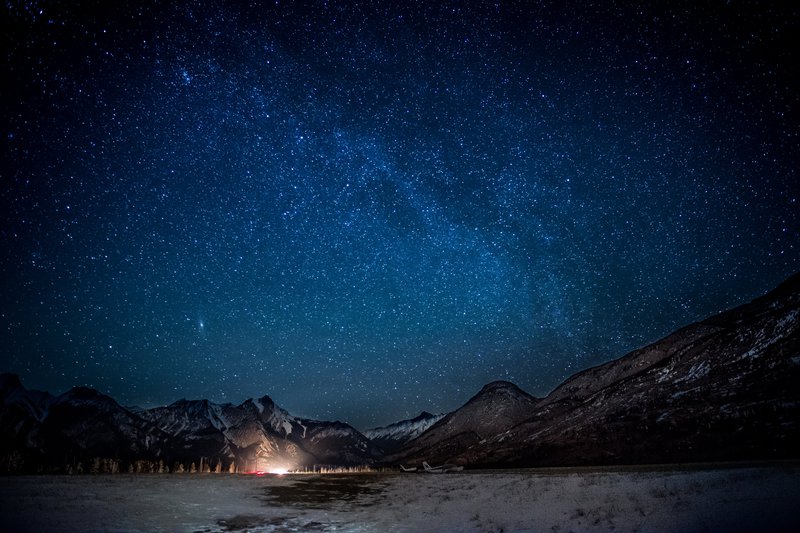
Planning a dark sky getaway to Jasper
What should you bring?
Warm layers, headlamp with red light functionality (this helps preserve your night vision), blanket/chair, telescope if you have one, constellation-finding map/app.
Do you need a telescope?
No, there is plenty to see with the naked eye. But if you want to go deeper into space, the Jasper Planetarium boasts the most powerful telescopes in the Rockies and offers nightly telescope tours all year round.
Astrophotography tips
It can be tricky to do, but there's something so enchanting about dark sky photography. To help you master the long exposures and other camera tips, here are some night sky photography tips from noted expert Jack Fusco.